

Are dried flowers truly natural and eco-friendly ?
Getting to know your dried flowers ; are they really 'sustainable' ?
In recent years, the dried flower market has really surged, with dried blooms gracing home décor, weddings, and even fashion runways. I really really love growing and working with dried flower varieties but I am really worried about this growing shift towards the misleading marketing used by some retailers when it comes to the sale of dried flowers; so bare with me while I have my little rant as I feel very strongly about this. Often marketed now as an "eco-friendly" and "sustainable" alternative to fresh flowers, dried flowers are praised for their longevity and lower maintenance. And yes, in their natural form, they really are a wonderful and sustainable eco-friendly option to choose and a carbon footprint significantly lower than fresh-cut flowers because they do not require cold-chain logistics or immediate disposal. However, I think some companies are not being as transparent about their products as they should be. As someone who both grows my own flowers (to organic principles) and who also imports flowers which I understand aren’t usually organic, I try to buy always as sustainable as possible and to be transparent about that.
So in this post, I just want to dive a little deeper into how you as a customer can make a more informed decision when purchasing dried flowers ; I believe we can all make a difference as long as we know how to.
What does the word 'sustainable' really mean ?
We throw this word around all the time now so it's meaning is getting lost and overused in the marketing world, but does everyone really understand what it actually means ? According to the United Nations Brundtland Commission (1987), sustainability is defined as:
"Development that meets the needs of the present without compromising the ability of future generations to meet their own needs." It encompasses a balance of environmental, social, and economic considerations to ensure long-term viability and responsibility.
So is the word ‘sustainable’ just becoming a common marketing word and thereby losing or diluting down its' significance and how do we keep it meaningful in the production and sale of 'dried flowers'.
The Growing Popularity of Dried Flowers
The global dried flower market has experienced significant growth in the last few years (valued at 2.8 billion USD in 2024) fueled by a shift in consumer demand towards sustainability. With the fresh flower industry often criticised for its environmental toll, particularly in water usage and pesticide applications, global shipping and carbon footprints, dried flowers seem like a reasonable eco-friendly alternative. The dried flower market is indeed expected to continue growing at a steady pace, driven by the increasing focus on sustainable lifestyles and home décor trends, so where is the problem ?
Well it is in the greenwashing of these products. ‘Greenwashing’ is the practice of companies making deceptive claims about the environmental benefits of their products, presenting them as "greener" than they actually are. In the case of dried flowers, the notion that they are inherently or automatically eco-friendly is I feel, often overstated or misleading.
Before I start, it is important to understand that there are two main types of 'dried flowers' you will see referred to online : dried and preserved. I will include these both under the umbrella terms dried flowers in this post but what's the difference ?
Dried flowers
What they are: Real flowers that have been dried by removing water or moisture from the plant.
How it’s done:
-
air-drying (hanging upside down)
-
pressing
-
drying with silica gel/desiccants
-
freeze-drying or gentle heat drying
What they feel/look like: mostly a dryer paper like texture and colour naturally fades over time and quicker if not cared for correctly.
One important detail:
In trade/product categories, “dried flowers” can still include flowers that are dyed, bleached, or otherwise treated — so “dried” on a label doesn’t always mean “untreated.” The simplest check is to look for words like dyed, bleached, preserved, treated, impregnated, or colour enhanced.
Preserved flowers
What they are: Real flowers that are treated so they stay soft and “fresh-looking” longer.
How it’s done:
The flower’s natural moisture is partly replaced with a preserving solution (commonly glycerin-based; sometimes other stabilising chemicals). They’re often dyed because natural colour doesn’t always hold.
What they feel/look like:
-
soft, flexible, sometimes slightly “rubbery” or leathery
-
keep their shape and texture longer than dried flowers
-
colours can look very even or “too perfect” because dye is common
Key point: Preserved flowers are about chemical treatment + stabilising, not just drying.
Chemicals, Dyes & Bleaches: Not So Natural After All
While dried flowers might not require the same energy-intensive cold storage or regular replacement as fresh flowers, they are not always the natural, toxin-free option they appear to be. Many imported dried and preserved flowers are artificially treated with harmful chemicals, including synthetic dyes and preservatives, or bleaches to enhance their colour, texture, and longevity.
These synthetic dyes often contain chemicals that are harmful to both human health and the environment. Some of the dyes used can release compounds which contribute to indoor air pollution or possible environmental pollution depending on the amount of regulation involved locally where production occurs. Additionally, the water and energy consumption involved in dyeing flowers are not always considered in sustainability claims, further inflating their "eco-friendly" image.
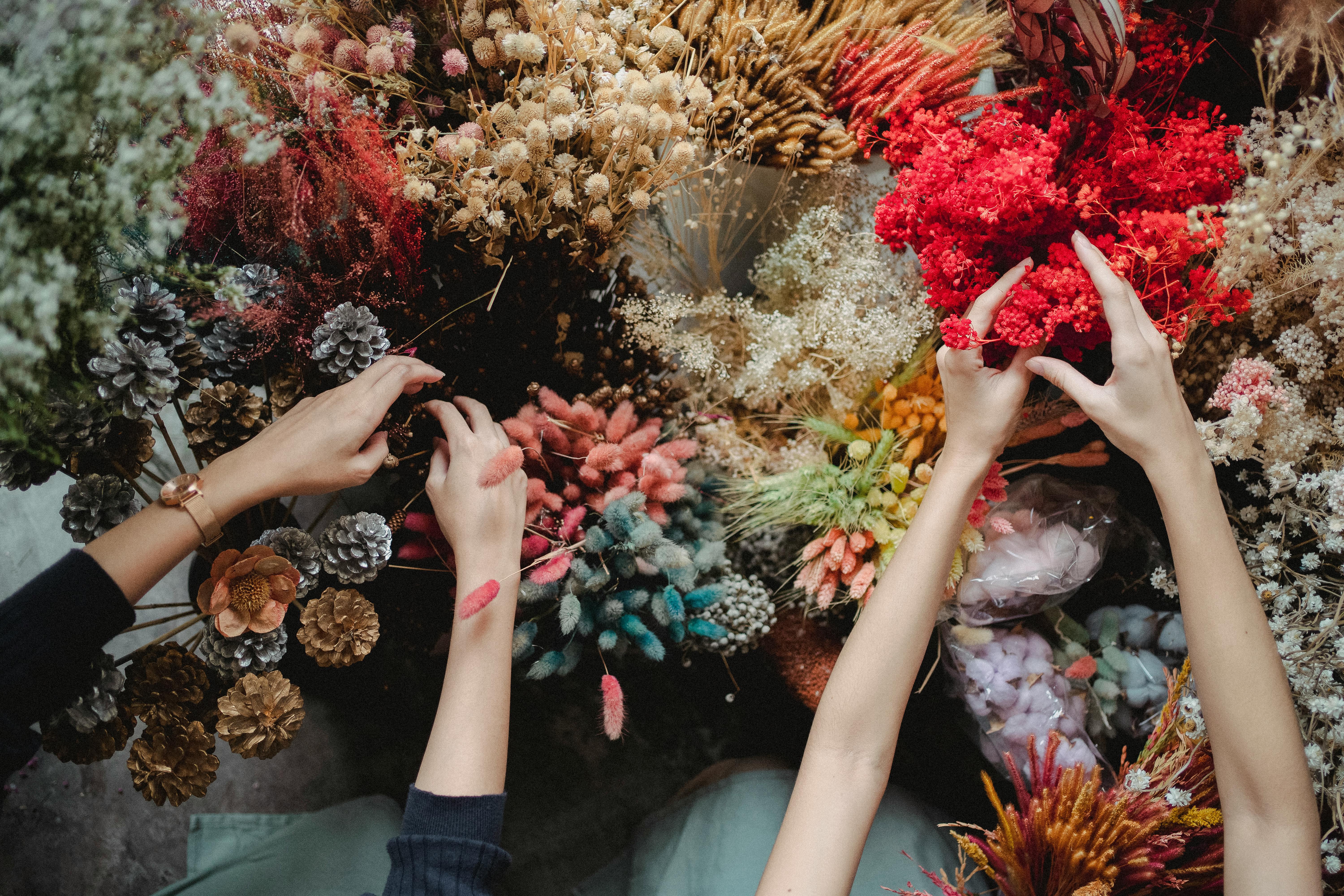
(Photo: stock image of dyed and sprayed dried flowers)
Where Do Dried Flowers Come From?
Another key consideration is the origin of the dried flowers. The global cut flower industry ships flowers efficiently and effectively across continents, with significant carbon emissions tied to transportation. Many dried flowers marketed as sustainable are still also imported from far-flung countries, including Ecuador, Kenya, and Colombia, where environmental and labour practices can be subpar to say the least. Unlike fresh vegetables and fruit where country of origin is easily found on packaging, especially here in the EU, no such regulation or labelling is required for the sale of fresh or dried flowers to end customers.
So, despite being dried, these flowers may still have a significant carbon footprint related to long-distance transport of the flowers albeit lower than fresh cut flowers, but similarly often traveling thousands of miles before reaching consumers. The carbon cost of transportation is rarely disclosed by companies marketing these products as "sustainable." Additionally, the cultivation of flowers in many countries sometimes involves the use of pesticides and unsustainable agricultural practices that further degrade their eco-friendly image .

The Impact of misinformation on you as the consumer
So, here you are trying to make an informed decision – but if you are not an experienced gardener or a florist or general flower geek like myself, well then how do you really know when a flower is actually dyed or not in its natural form or colour? In the case of dried flowers, the promises made by marketers can feel especially tempting when it comes to the sustainability benefits; so here are a few tips to help you make a good purchasing decision and to ensure you are really getting an eco-friendly option wherever you are located:
- Go Local: Choose dried flowers that are locally grown and dried using natural methods like airdrying. Supporting local flower farmers first reduces the carbon footprint associated with shipping and transportation. Look for seasonal, native plants that are grown with minimal intervention.
-
Avoid Chemically Treated Flowers: Opt for naturally dried flowers that have not been treated with preservatives, artificial dyes or bleached. Yes, there are of course ways of dyeing flowers with natural dyes too but generally this is not the case in large scale commercial operations. If the colours of the flowers you are buying are really unusually bright like the bunch of rainbow bunny tail grass above or multicoloured baby's breath, well these are most certainly dyed. There are commercial growers working on breeding unusual colours of plants but in nature most grasses and popular wedding flowers like baby’s breath do not grow naturally in every colour of the rainbow which you will see in many online websites now. If you really aren’t sure, just ask your florist or the shop you are buying them from. Naturally dried flowers may not be always be as vivid in the long term but in my opinion can be just as pretty and more interesting. If you are choosing dried flowers for your wedding, ask your floral designer about this too if you really want to be sustainable for your special day. There are so many wonderful dried flower artists out there who create beautiful work with real flowers that aren't dyed or chemically treated. For some show stopping colourful work to prove my point check out Layla Robinson : https://www.laylarobinson.com.
- Check Certifications: Seek out flowers from farms that follow sustainable and ethical practices. Look for certifications like Fairtrade or organic labelling, which indicate that the flowers were grown or processed without harmful chemicals and with fair labour practices in mind.
- DIY Dried Flowers: For the ultimate eco-friendly option, consider drying your own flowers even if you have some fresh flowers that you bought in a shop and that is all that you have access to. This gives you control over the process and ensures that no harmful chemicals are used. Many types of flowers, like lavender, hydrangea, and roses, can be dried easily at home. You can check out my other blog post for some tips on how to get started with that.
- Look for recyclable or compostable packaging with all purchases. Every little helps.
So our beloved floral industry, much like many other industries, is susceptible to greenwashing tactics too that mislead well-meaning consumers. While dried flowers can be a more sustainable option when sourced and treated responsibly, I don't believe that many of the products on the market today live up to their eco-friendly claims. By being informed about the realities of dried flower production and choosing local, untreated options, you as the consumer can make genuinely sustainable choices. With a little research, it’s possible to separate the marketing from the truth and cultivate a greener lifestyle one bloom at a time!
If you have any questions or queries or need some advice on purchasing sustainable dried flowers, do free free to send me an email to trisha@flowersonfouracres.ie.
If you would like to read more about sustainability and the floriculture industry as a whole , here are some started articles for you to read or reference:
- Lan et al. (2022) – “Life cycle environmental impacts of cut flowers: A review” (Journal of Cleaner Production)
- treeze / Fairtrade – “Life Cycle Assessment: Cut Roses” (updated studies)
- Defra / Cranfield University (Williams, Audsley & Sandars) – the “Kenya vs Netherlands roses”
- Books - one of the first ever books I read on the cut flower industry is Amy Stewart's book, Flower Confidential: The Good, the Bad, and the Beautiful in the Business of Flowers, first published in 2007). I found this to be a very powerful and impactful story and an important background to why I do and love what I do and believe in the importance of locally grown first.
- Other recommended books :
- A Feast of Flowers: Race, Labor, and Postcolonial Capitalism in Ecuador — Christopher Krupa (University of Pennsylvania Press, 2022)
- The Kenyan Cut Flower Industry and Global Market Dynamics — Edited by Andreas Gemählich (Boydell & Brewer, 2022; Cambridge Core release 2023)
- Roses from Kenya: Labor, Environment, and the Global Trade in Cut Flowers — Megan A. Styles (University of Washington Press, 2019)